Wheat Dosai Recipe | Goduma Dosai | Atta Dosai
- Latha K

- Nov 4, 2025
- 2 min read
Wheat and Rice Flour Dosa
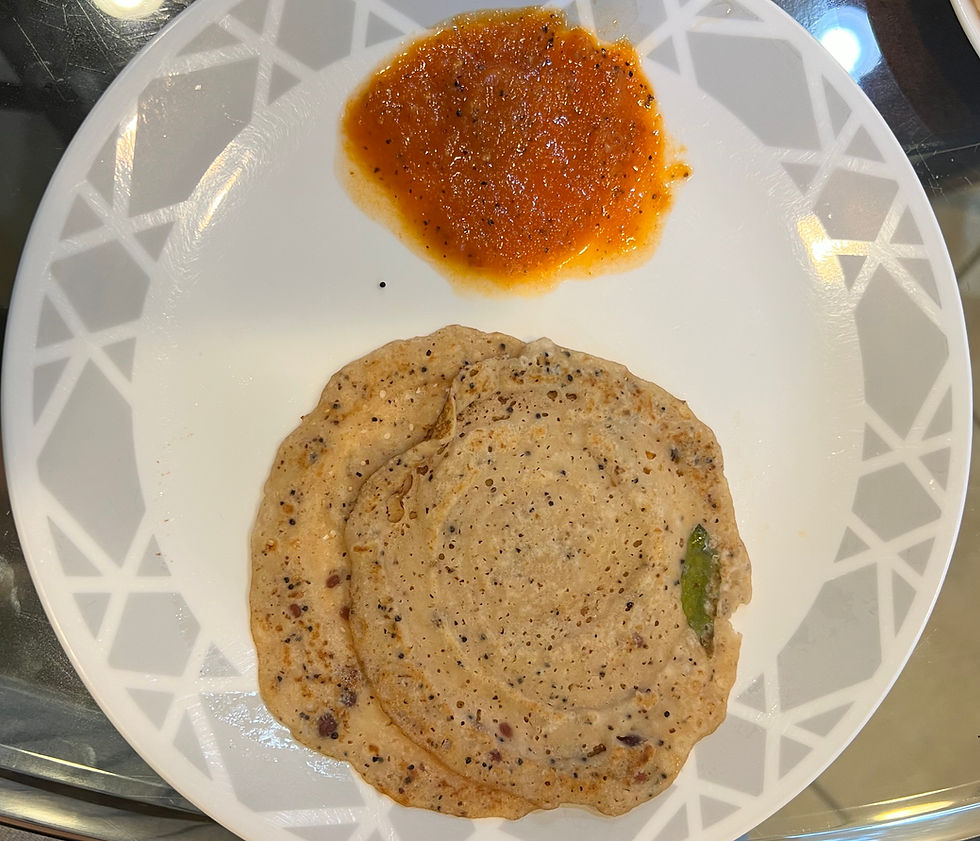
Serves: 3 Preparation Time: 10 minutes Resting Time: 30 minutes Cooking Time: 15 minutes
Ingredients
1 cup wheat flour
1 cup rice flour (for a crisper texture)
A pinch of asafoetida (hing)
1 teaspoon coriander powder
1 teaspoon cumin powder
1 teaspoon chana dal
1 teaspoon urad dal
1/2 teaspoon of black pepper
1/2 teaspoon of grated ginger(remove skin)
½ teaspoon mustard seeds
A few fresh curry leaves
Handful of finely chopped Cilantro leaves
Salt, to taste
Water, as required
Oil, for tempering and cooking
Optional Additions:
1 small carrot, grated
1 small onion, finely chopped
Method
Prepare the Batter - In a mixing bowl, combine wheat flour and rice flour. Gradually add water to form a smooth, lump-free batter of medium consistency. Set aside.
Prepare the Tempering - Heat 1 teaspoon of oil in a small pan. Add mustard seeds and allow them to splutter. Add chana and urad dal, and sauté until they turn golden brown. Stir in asafoetida, coriander powder, cumin powder, and curry leaves. Sauté briefly until aromatic.
Combine - Add the prepared tempering to the flour batter. Season with salt, cilantro leaves and mix well. Cover and let the batter rest for 30 minutes.
Add Vegetables (Optional) - If desired, mix in the grated carrot and finely chopped onion. ( If you are making onion and tomato chutney, skip adding onion in the batter)
Cook the Dosa - Heat a non-stick tawa (griddle) over medium heat and lightly grease it with oil. Adjust the batter consistency by adding a little water as it should resemble traditional dosa batter (pourable but not runny). Pour a ladleful of batter onto the tawa and spread it evenly in a circular motion. Drizzle a few drops of oil around the edges. Cook until the edges turn golden brown, then flip and cook the other side for about one minute.
Serve - Serve hot with tomato–onion chutney, coconut chutney, idli chutney powder or sambar.
Ayurvedic Health Summary
This dosa harmoniously combines grounding grains with digestive spices, making it a tridoshic dish which means balancing Vata, Pitta, and Kapha when consumed warm and freshly prepared. The inclusion of ginger and black pepper enhances Agni (digestive fire), supports detoxification, and prevents heaviness, especially in cooler or damp climates.
Energetic Profile:
Rasa (Taste): Sweet, pungent, slightly astringent
Guna (Qualities): Light (laghu), slightly unctuous (snigdha)
Virya (Energy): Warming
Vipaka (Post-digestive Effect): Sweet
Dosha Balance:
Vata: Calmed by warmth, gentle oil, and digestive spices
Pitta: Balanced by cooling grains and moderate spice
Kapha: Reduced through warming spices, hing, and light preparation
Ayurvedic Benefits:
Strengthens Agni and promotes clear digestion
Reduces bloating and supports healthy metabolism
Lightens the body while providing steady energy
Nourishes without heaviness, supporting mental clarity and vitality
Serving Recommendation: Enjoy fresh and warm, accompanied by light chutneys such as tomato–onion, coriander, or mint. Avoid pairing with cold foods or yogurt to maintain digestive strength. A small drizzle of ghee before serving adds grounding and flavor balance.
Do share your comments after you have tried this recipe:)

Comments